Traveling With Aging Parents
Traveling With Aging Parents Changes the Way You See the World
There comes a point when traveling with your parents or older relatives starts to look different than it used to.
You begin noticing benches. Elevators. How far the walk is from the parking garage to the museum entrance. You start building extra time into the itinerary, researching direct flights, and quietly choosing restaurants based less on trendiness and more on comfortable seating and noise levels.
The shift happens slowly. One day you realize the people who once planned every family trip now rely on you to think ahead. They may not say it, but they love traveling with you because you take care of everything and they can just enjoy being there.
And while there is some grief in recognizing that change, there is also something deeply beautiful about it. Traveling with aging parents has a way of slowing you down in the best possible ways. It teaches you that the most meaningful trips are rarely the ones where you “see everything.” They are the ones where everyone feels cared for enough to actually enjoy being together.
Build the trip around comfort, not accomplishment
One of the biggest mistakes people make when traveling with older relatives is trying to maintain the same pace they had in their twenties.
Not every trip needs to be packed from sunrise to bedtime.
Leave room for rest. (Seriously, schedule some nap time).
Choose one or two meaningful activities per day instead of six rushed ones. Book accommodations in central locations so nobody has to spend unnecessary energy commuting back and forth. Direct flights are worth the extra money if possible.
A slower itinerary often creates better memories anyway.

Prioritize accessibility before you arrive
A place can look perfect online and still be exhausting in reality. Obviously, you aren’t choosing to hike the Alps, but you may not think of less evident challenges.
Before booking, check things like:
How many stairs are involved
Whether there are elevators
Walking distances between attractions
Availability of seating
Terrain (cobblestones, steep hills, uneven sidewalks)
Bathroom accessibility
Transportation options
A “walkable city” sounds romantic until someone in your group struggles with mobility or stamina.
Leave margin everywhere
Older travelers often move at a different pace, especially through airports, crowds, or long travel days.
Leave extra connection time. Arrive earlier than necessary. Avoid overcommitting. Build breaks into the day even if nobody initially asks for them.
The goal is not efficiency. It is enjoyment. Nothing drains a trip faster than everyone feeling rushed and exhausted.
Take more photos of them than the destination
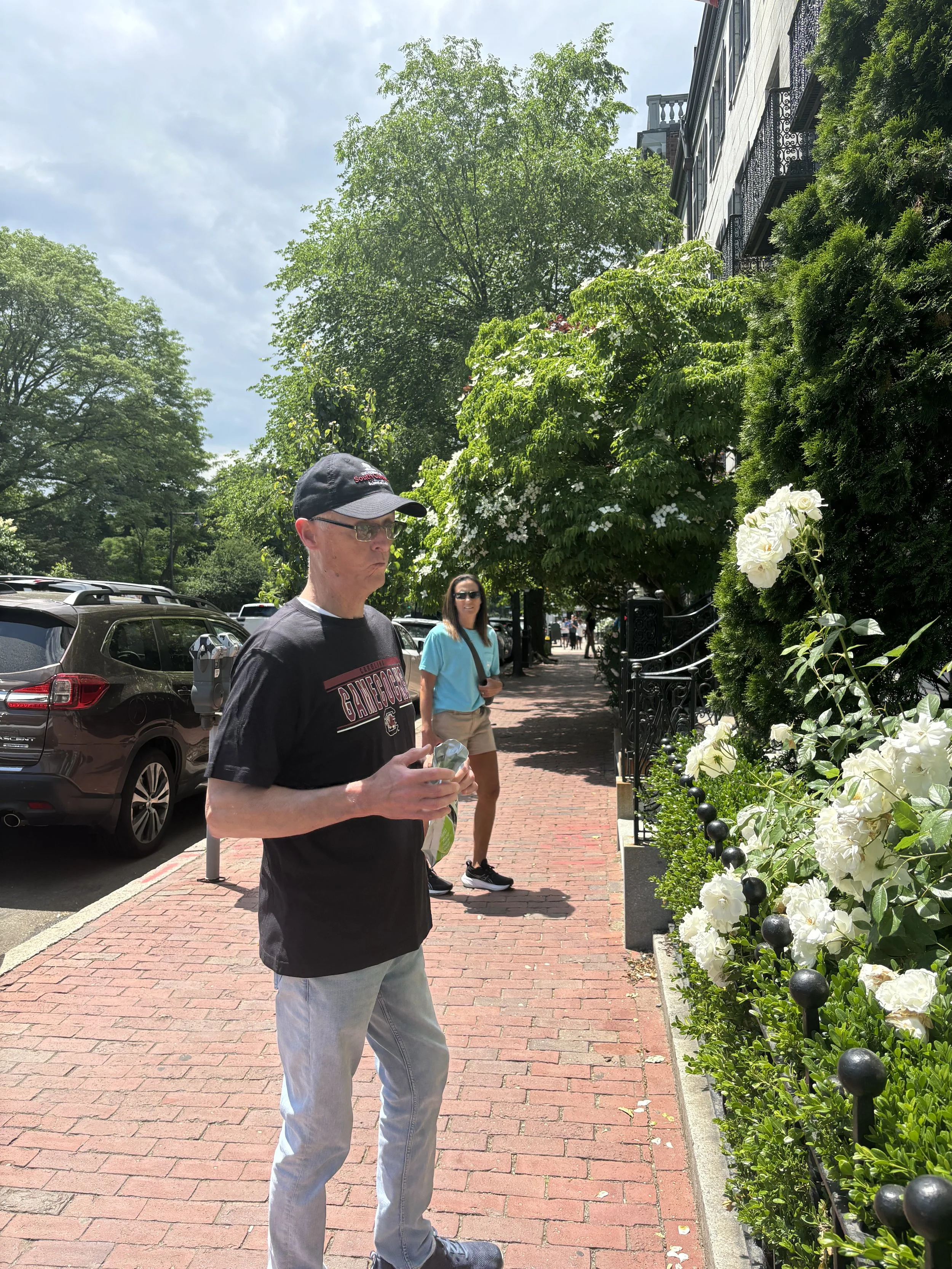
Years from now, the image that matters most probably will not be the cathedral or the skyline.
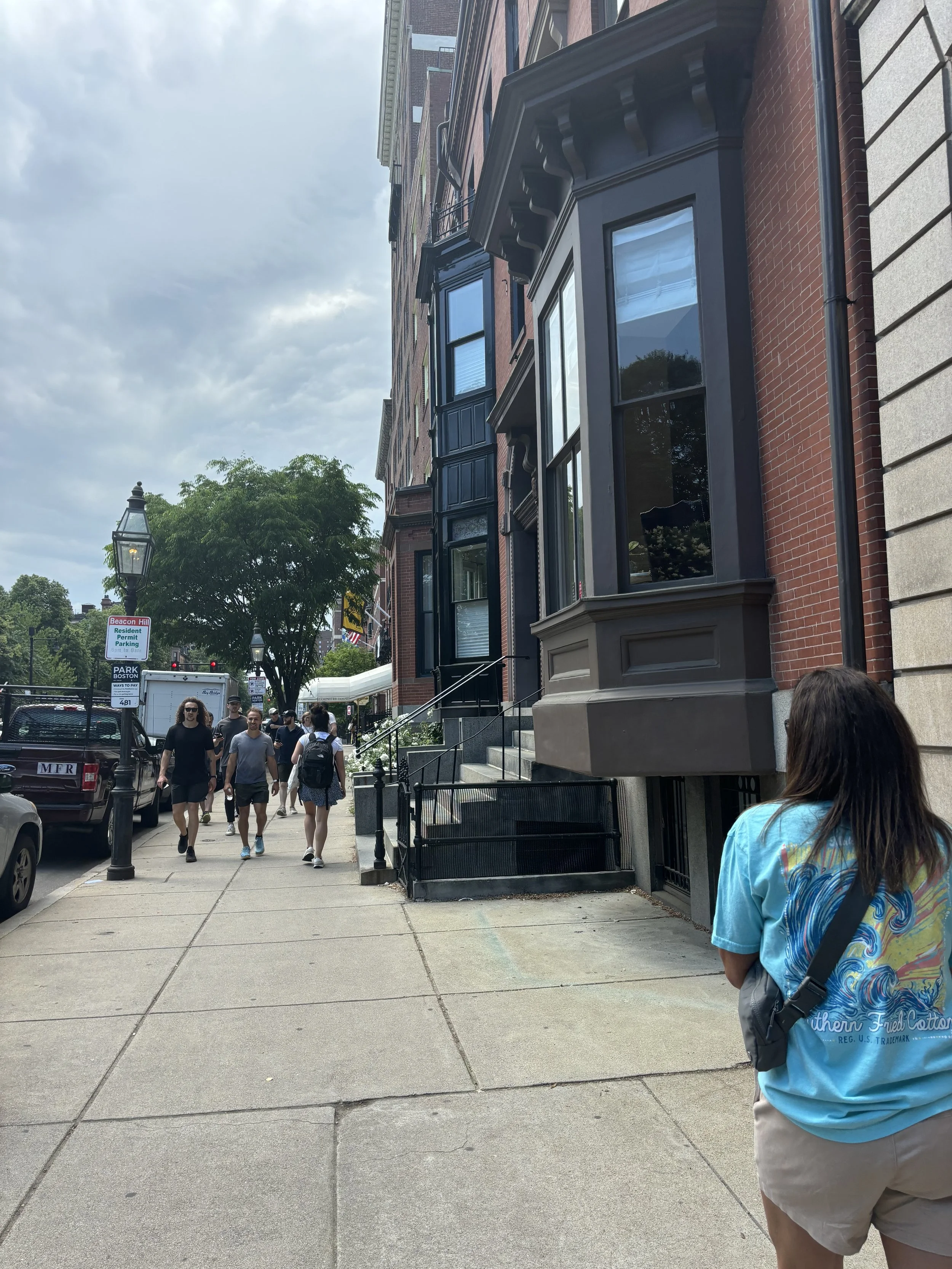
It will be your dad discussing the scenery. (See my Dad discussing flowers on the streets of Boston).
Your grandmother sitting by the water. Your mom reading in the hotel robe with coffee beside her. (Or running around the city if she is like mine).
Photograph ordinary moments. Those become priceless later.
Let them tell the stories (again)
Travel has a way of bringing memories to the surface. You may hear the same stories multiple times — childhood memories, how they traveled here when they were younger, stories about your grandparents, moments from your own childhood vacations.
Let them tell the stories. One day you would give anything to hear them again.
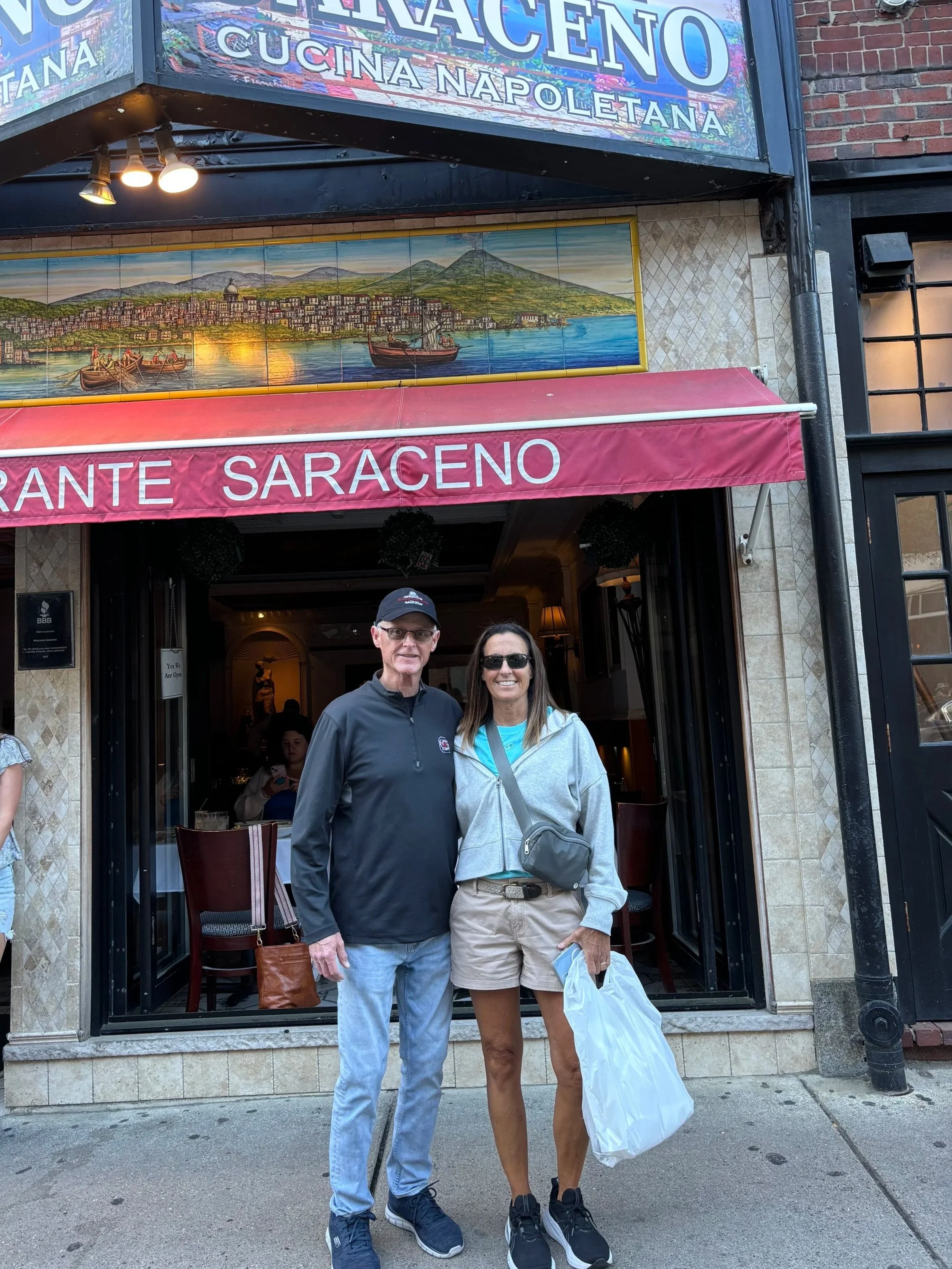
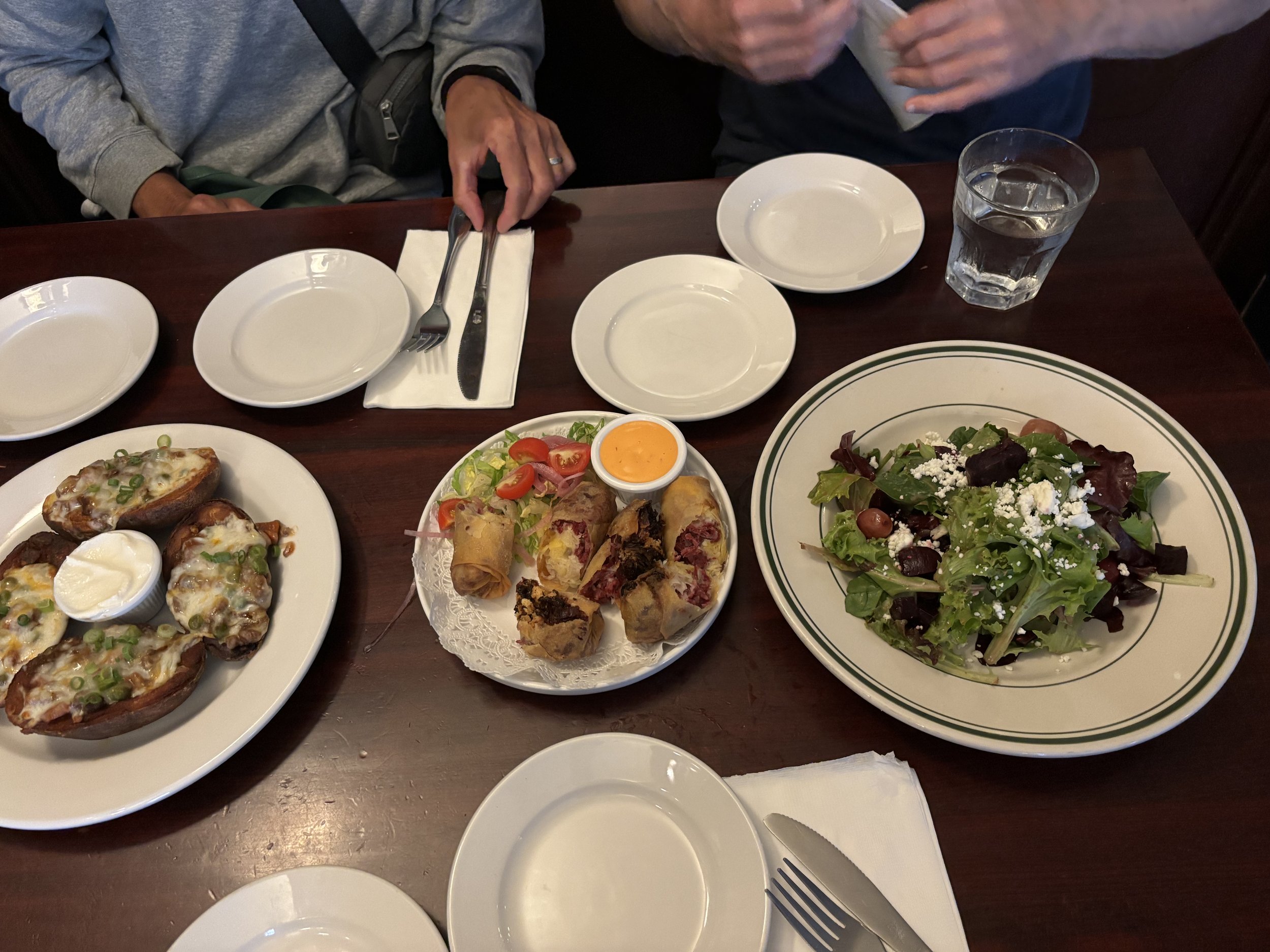
My parents ate here when they came on a trip 20 years earlier. A picture was obviously necessary.
Choose presence over perfection
Not every trip will go smoothly. Someone may get tired. Plans may change. Weather may ruin the itinerary. Patience may wear thin (more on this next).
But traveling with aging parents teaches you something important: the trip is not really about maximizing a destination.
It is about maximizing time.
One day, you may not remember every landmark you visited together. But you will remember the small moments — slow breakfasts, long conversations in the car, shared desserts, quiet walks, airport coffees before sunrise.
Travel begins to feel less like escape and more like stewardship. A way of loving people while you still can.




Practice Patience
Traveling with aging parents also teaches you patience in ways you do not expect. Not (always) a frustrated, gritted-teeth kind of patience, but a softer one. A more tender one.
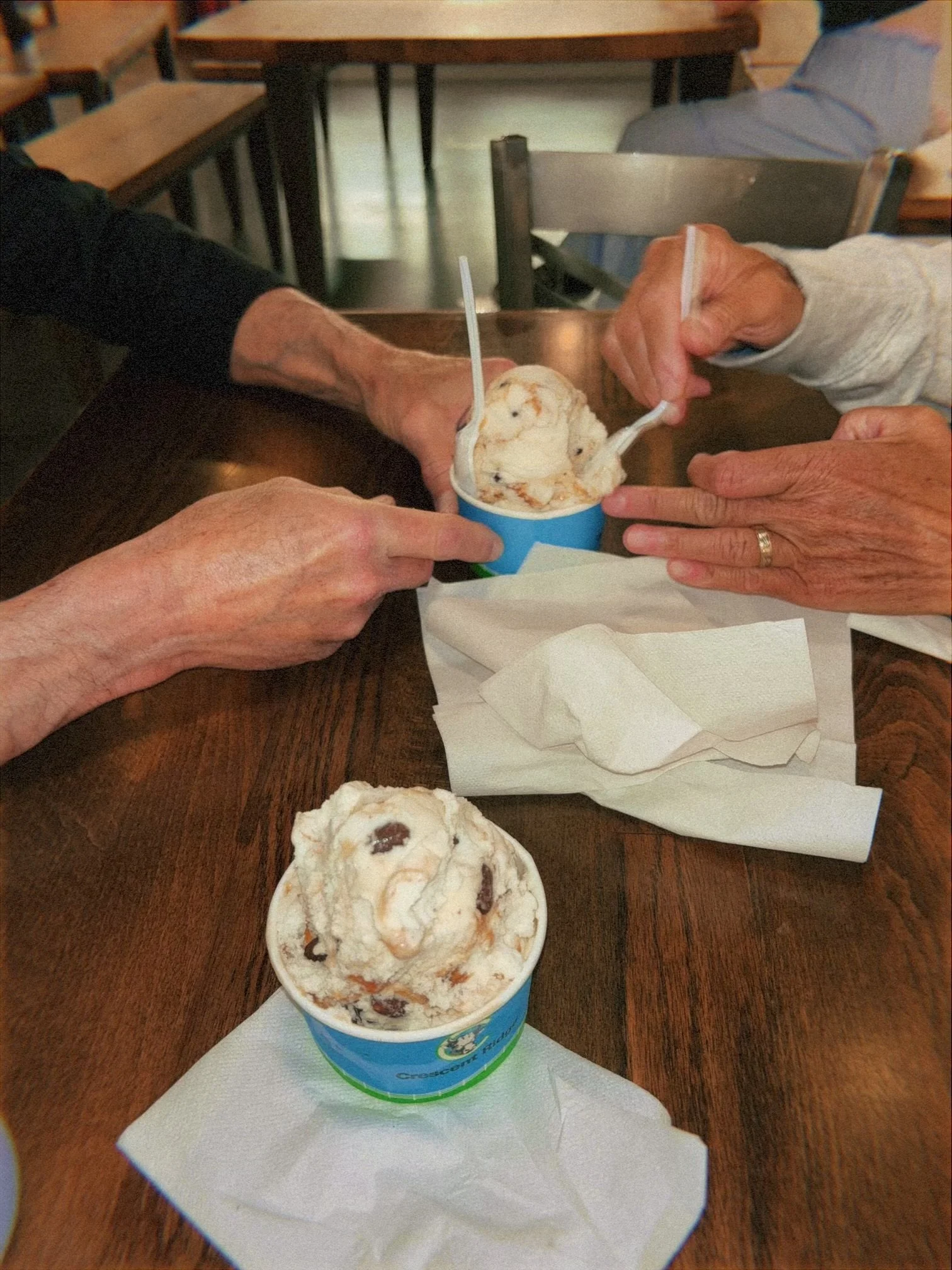
You explain how Uber works three separate times and laugh when they talk about the experience for hours after their first ride. You smile as your dad points out for the fiftieth time that the weather is “just perfect today.” You roll with it when your mom questions your directions despite the GPS actively working in your hand. You stop for the ice cream. You linger at dinner. You take the slower route back to the hotel because they want to look in the little shop window one more time. (Or maybe they just need to move a little slower because their feet hurt — go with it and give them grace).
And somewhere in those moments, you realize something humbling:
They likely once did all of this for you.
They answered your endless questions (“are we there yet?”). Waited while you tied your shoes. Stopped for snacks and bathroom breaks and souvenirs. They listened to the same stories, the same songs, the same observations repeated over and over again simply because they loved you.
When you are younger, it is easy to think of patience as something adults give children.
But eventually, if you are lucky, life gives you the chance to return it.
And honestly, that may be one of the greatest privileges adulthood offers us. Take a trip with your parents.
bytaylormcgee
***thank you to my parents for allowing use of these pictures from our trip to Boston. While they are technically “aging,” they are still young!!!
